How Much Car Payment Can I Afford? Avoid the Car Payment Trap
A car payment can look affordable on paper — until it starts stealing money from your emergency fund, debt payoff, investing goals, and monthly breathing room.
The question “how much car payment can I afford?” is one of the most important personal finance questions to ask before signing an auto loan. The mistake many buyers make is focusing only on the monthly payment instead of the full cost of owning the vehicle.
A car payment is not just a transportation cost. It can become a long-term budget trap when it crowds out savings, emergency funds, investing, debt payoff, rent, mortgage payments, groceries, insurance, and other financial priorities.
According to Edmunds, the average monthly payment for financed new vehicles reached $773 in Q1 2026, while the average amount financed hit a record $43,899. That means many buyers are not just buying cars — they are taking on large long-term financial commitments. Source: Edmunds
Experian also reported that the average used-vehicle monthly payment reached $531 in Q1 2026. So even used cars are no longer automatically “cheap” once financing, insurance, fuel, repairs, and maintenance are included. Source: Experian
“`The Car Payment Trap Explained
The car payment trap happens when a buyer asks, “Can I afford the monthly payment?” instead of asking, “Can I afford the total cost of this car?”
Dealers and lenders can often make a car look affordable by stretching the loan term. A longer loan may reduce the monthly payment, but it can also increase the total interest paid and keep you in debt longer. In some cases, buyers may still owe more than the car is worth, especially if the vehicle depreciates faster than the loan balance falls.
Edmunds reported that more than 3 in 10 Americans trading in a vehicle owed more on their loan than their car was worth, with the average underwater trade-in carrying over $7,000 in negative equity. That is how one car loan can quietly roll into the next one. Source: Edmunds Insights
This is why the monthly payment is only one part of the decision. A lower payment does not always mean a better deal. Sometimes it simply means you are spreading the cost over more years.
“`What Should Be Included in Your Car Budget?
Before deciding how much car payment you can afford, calculate the full monthly cost of ownership. The Consumer Financial Protection Bureau recommends looking beyond the car price and including ongoing costs such as interest, insurance, and routine maintenance. Source: CFPB
Your real car budget should include:
- Monthly loan payment: The amount you pay toward principal and interest.
- Auto insurance: This can rise sharply depending on the car, your location, driving history, and coverage level.
- Fuel or charging: Gas, electricity, and commuting costs should be part of the monthly budget.
- Maintenance: Oil changes, tires, brakes, filters, inspections, and routine service.
- Repairs: Unexpected repair costs can hit hard if you have no emergency fund.
- Registration and taxes: Many buyers forget these recurring costs.
- Depreciation: Your car may lose value faster than you pay down the loan.
- Opportunity cost: Money going to a car payment cannot also go to investing, debt payoff, or savings.
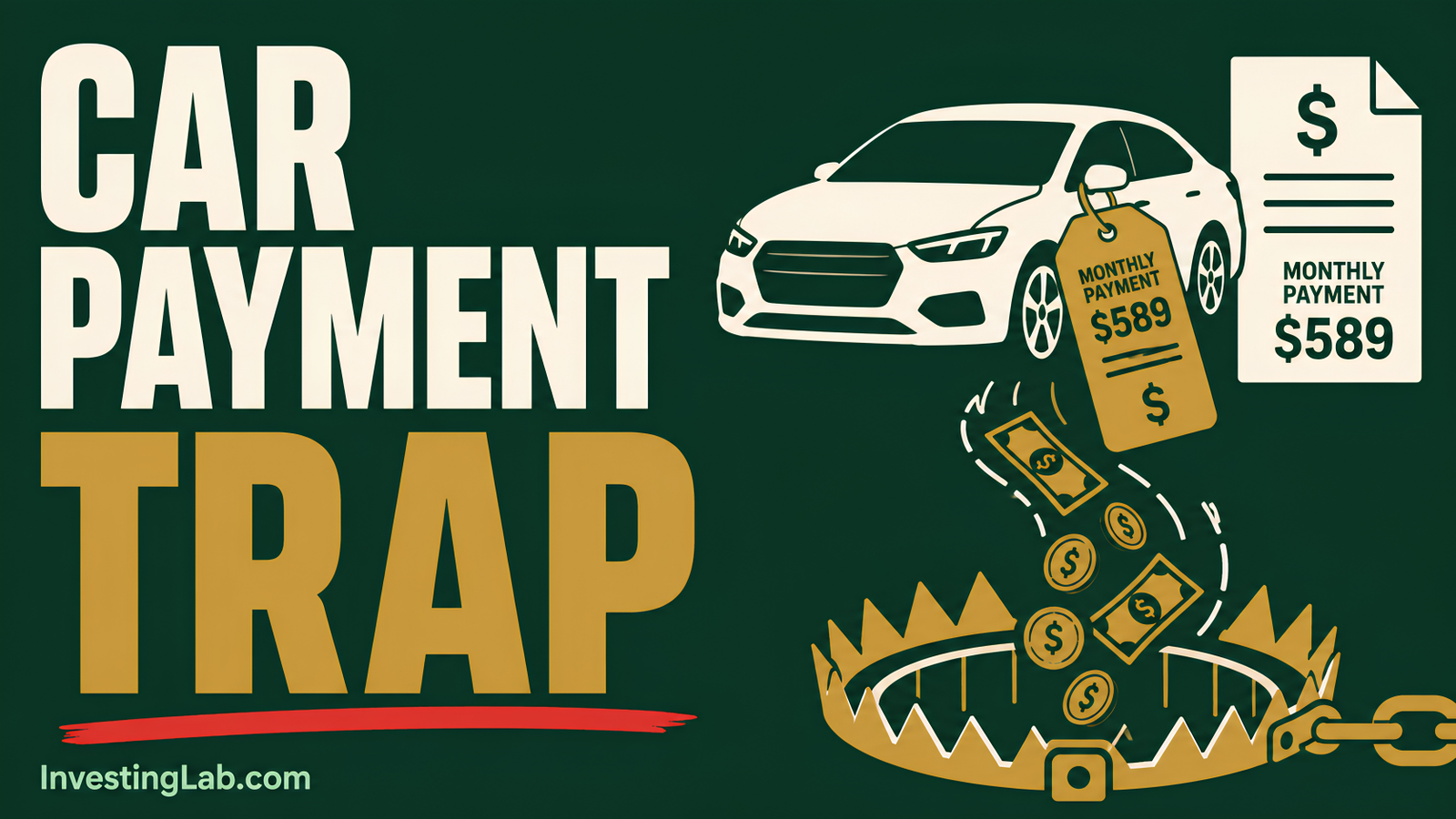
A car that looks affordable at $589/month may become much more expensive once insurance, fuel, repairs, and maintenance are added.
“`So, How Much Car Payment Can I Afford?
There is no perfect answer for everyone, but a safe starting point is this: your car payment should fit inside your monthly budget without forcing you to sacrifice emergency savings, rent or mortgage payments, groceries, insurance, debt payoff, and retirement contributions.
In simple terms, you may be taking on too much car payment if the payment causes any of these problems:
- You cannot save money each month.
- You are carrying credit card debt.
- You do not have an emergency fund.
- You need a long loan term just to make the payment work.
- You are relying on overtime, bonuses, or side income to afford the car.
- You have no room left for repairs, tires, insurance increases, or unexpected expenses.
The car you can technically finance is not always the car you can comfortably afford.
Run Your Monthly Budget First
Before signing an auto loan, use the free InvestingLab Budget Planner Calculator to see whether the car payment actually fits your income, expenses, savings, and debt goals.
Example: The $589 Car Payment Trap
Imagine someone earns $4,500 per month after taxes and signs up for a $589 monthly car payment.
At first, $589 may seem manageable. But the real monthly transportation cost could look more like this:
- Car payment: $589
- Insurance: $180
- Gas or charging: $220
- Maintenance and repairs fund: $100
- Registration, tires, and annual costs averaged monthly: $60
Total estimated car cost: $1,149/month.
That is not just a car payment. That is a major monthly financial obligation. If that buyer also has rent, groceries, debt payments, phone bills, subscriptions, and family expenses, the car can quickly become the reason they feel broke.
“`The Hidden Cost: What Your Car Payment Replaces
The biggest problem with a high car payment is not only the payment itself. It is what the payment replaces.
That money could have gone toward:
- Building a 3–6 month emergency fund
- Paying off high-interest credit card debt
- Investing for retirement
- Saving for a home down payment
- Starting a business
- Reducing financial stress
A car can be useful, necessary, and even enjoyable. But if the payment keeps you from building wealth, the car is no longer just transportation — it has become a financial anchor.
The New York Fed reported that auto loan balances remain a major part of household debt, which shows how large auto borrowing has become in the broader economy. Source: Federal Reserve Bank of New York
“`Car Payment Red Flags
Be careful if any of these apply before buying:
- The dealer keeps asking only what monthly payment you want.
- You need a 72-month or 84-month loan to make the payment affordable.
- You are rolling negative equity from your old car into the new loan.
- You did not check insurance costs before buying.
- You have no cash buffer for repairs or emergencies.
- You are buying mainly because of lifestyle pressure.
- You do not know the total interest cost of the loan.
The most dangerous car purchase is the one that feels affordable only because the monthly payment has been stretched across too many years.
“`A Better Way to Decide How Much Car You Can Afford
Instead of starting at the dealership, start with your budget.
- Calculate your monthly take-home pay.
- List your fixed expenses: rent, mortgage, utilities, insurance, phone, groceries, and debt.
- Set savings targets first: emergency fund, retirement, debt payoff, and future goals.
- Decide how much room is left for transportation.
- Include the full vehicle cost: payment, insurance, fuel, maintenance, repairs, taxes, and fees.
- Get preapproved before shopping.
- Compare loan offers and total loan cost.
The goal is not to buy the cheapest car possible. The goal is to buy a car that does not weaken the rest of your financial life.
“`Use the InvestingLab Budget Planner Before Buying
The best way to avoid the car payment trap is to test the payment before signing. Add the car payment into your monthly budget and see what happens.
If the payment destroys your savings rate, prevents debt payoff, or leaves no room for emergencies, the car is probably too expensive for your current situation.
Try the Free Budget Planner Calculator
Use the InvestingLab Budget Planner Calculator to test your car payment against your income, expenses, and savings goals.
You can also compare whether extra cash should go toward debt payoff or investing using the Debt vs Invest Calculator.
“`Watch the Video: The Car Payment Trap
FAQ: How Much Car Payment Can I Afford?
What is a good monthly car payment?
Is a $700 car payment too much?
Why do dealers focus on monthly payment?
Should I get preapproved before buying a car?
What is the biggest mistake people make with car payments?
Final Thoughts
The car payment trap is not about hating cars. It is about protecting your financial future.
A reliable car can help you get to work, support your family, and improve your quality of life. But an oversized car payment can quietly keep you stuck for years.
Before asking, “Can I afford the car?” ask a better question:
Can I afford this car without sacrificing my emergency fund, debt payoff, investing goals, and financial peace?
If the answer is no, the payment may be a trap.
Start with your budget. Run the numbers. Then buy the car that fits your life — not the payment that traps it.
“`Disclaimer: This article is for educational purposes only and is not financial, tax, legal, lending, or automotive advice. Auto loan terms, interest rates, insurance costs, vehicle prices, and personal financial situations vary. Always compare loan offers, review the full cost of ownership, and make decisions based on your own budget.